


Term Dates

Calendar

Report Absence

Policies & Procedures
Tēnā Koutou,
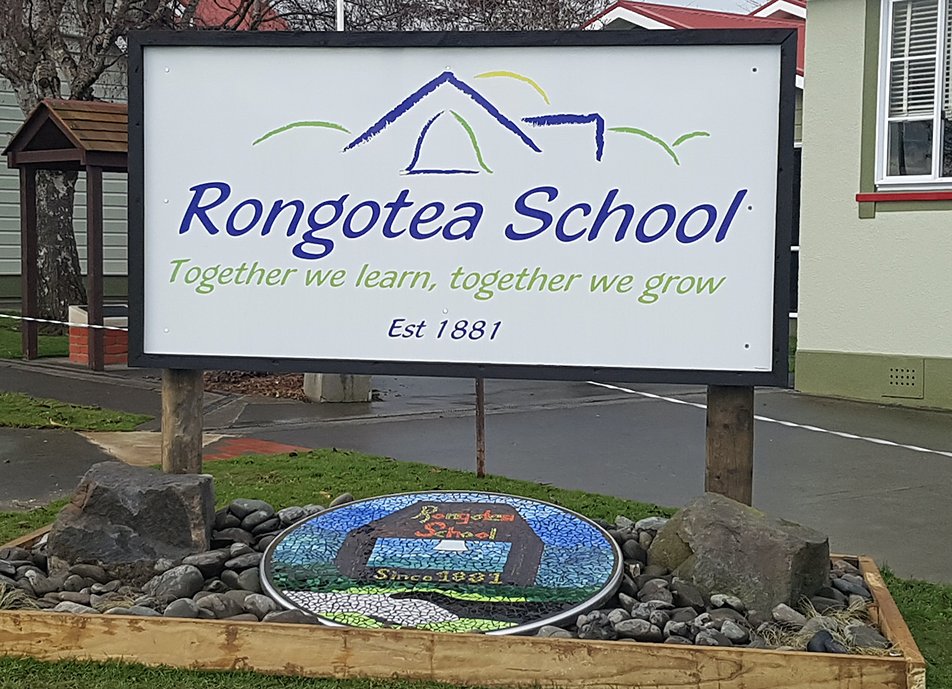
My name is Troy Anderson and I'm proud to lead the team here at Rongotea School. We are a rural school of 155 pupils in the heart of the Manawatu. We have eight amazing classrooms and a wonderful supportive community, an active Board of Trustees and a hard working PTA.
If you're considering us as a school for your child, please drop by, email me at principal@rongotea.school.nz or phone 06 324 8614.
Here at Rongotea School, we are very proud of the fantastic facilities we have. We have plenty of space to run around, play rugby, cricket, swim in our school pool, play tennis, bike on our bike track, exercise on our fitness track or play on our playgrounds.
We are currently focusing on developing a localised curriculum, this curriculum is developed to suit all learners at Rongotea School.
We have co-constructed classrooms, children setting student learning goals and next learning steps. It's important that each student knows what their learning goal is and what they can do to become successful life long learners.
28 Oct 2026
Evening everyone,
Our school athletics day is fast approaching and I'm after a few volunteers to help out. It will most likely be timekeeping and possibly helping at long jump. If you are able to help out at all - even for a few hours - can you please email me on jenna.mcdonald@rongotea.school.nz
More info regarding the day will come out early next week.
Thanks
Jenna
Kia ora whānau,
Great news—our carpark is now open for use!
Please keep a few quick safety and operational updates in mind when using the space:
Thank you for your support in keeping our tamariki and community safe!
Pool Keys will be on sale from the office from Tuesday the 27th October. The pool will be open for swimming from the !st November 2026 to 31st March 2027. Keys remain the same price as last year, $100. Lets hope for a wonderful summer of swimming!
End of year trophies and cups
With the end of the year fast approaching, it is now time to hand back the trophies and cups that your child recieived at last years prizegiving. Please return them to the office as soon as you can as these will need to got to the engravers for this years prizegiving.
Thankyou.
Touch Draw Thursday 21/10
Round 1 @ 4pm
Rongotea Blues vs St Josephs Turbos - Field 6a
Rongotea Reds vs Kopane mixed - Field 7a
Round 2 @ 4.35pm
Rongotea Brumbies vs St Josephs Magpies Field 7b
Rongotea Warratahs - BYE
Round 3 @ 5.10pm
Rongotea Crusaders vs St Josephs Steelers Field 7b
Rongotea Highlanders - BYE
Round 4 @ 5.45pm
Rongotea Warriors vs Rongotea Hurricanes Feild 7
Parents, please support our local businesses





Call Direct

Send Email

Visit Website
Call Direct
Send Email
Visit Website
Call Direct
Send Email
Call Direct
Send Email
Visit Website
Call Direct
Send Email
Visit Website
Call Direct
Send Email
Visit Website
Call Direct
Send Email
Visit Website
Visit Website
Visit Website
Call Direct
Send Email
Visit Website
Call Direct
Send Email
Visit Website